
Mind map and concept map diagrams
Mind maps and concept maps both show a central topic with branching sub-ideas. A
mind map has colourful, organic branches and suits a brainstorm. A concept map has
boxed concepts joined by labeled relationships and suits a domain model. They share one
grammar. The keyword (mindmap or conceptmap) picks the look.
Mind map
Section titled “Mind map”Use a mind map for brainstorms, personas, and shaping ideas: a central topic with coloured branches fanning out into rounded, branch-tinted chips.
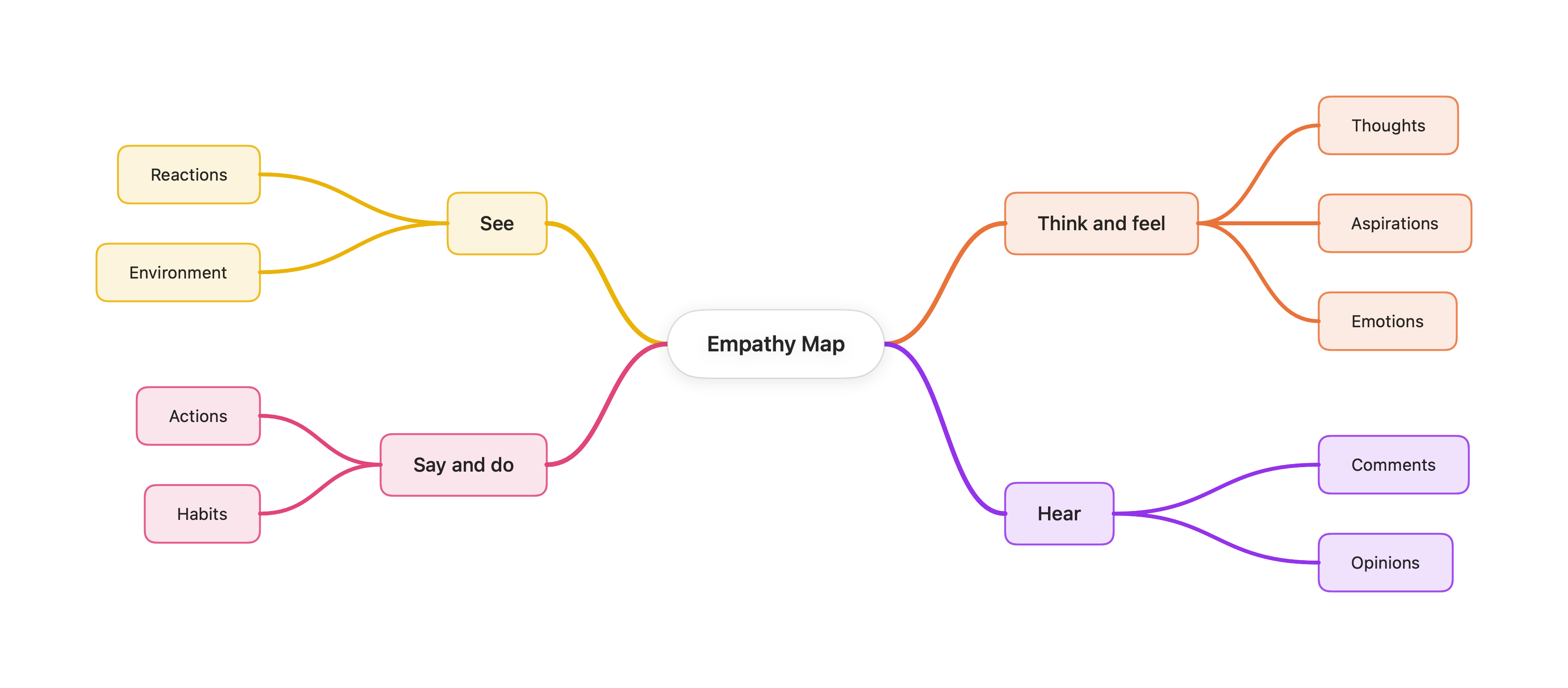
mindmap root((Empathy Map)) Think and feel Thoughts Emotions See Reactions Environment Say and do Actions Habits Hear Comments OpinionsThe first keyword is mindmap. The first content line is the root, drawn as a centred
pill. Indentation builds the hierarchy. A more-indented line is a child of the nearest
shallower line above it. Top-level branches split left and right. Each gets its own colour,
inherited by its children, and the connecting curves and rounded chips share the branch
colour.
Pinning a branch
Section titled “Pinning a branch”Branches balance left and right by leaf count automatically. Force one to a side with a
side <id> left / side <id> right directive in a vizzy fence, naming the top-level
branch by id:
side Hear leftMind maps are built around the tree. When relationships between concepts are the point, use a concept map instead.
Concept map
Section titled “Concept map”Use a concept map for domain models, design docs, and showing how parts fit together: boxed concepts with labeled, dashed relationships between them, laid out radially.
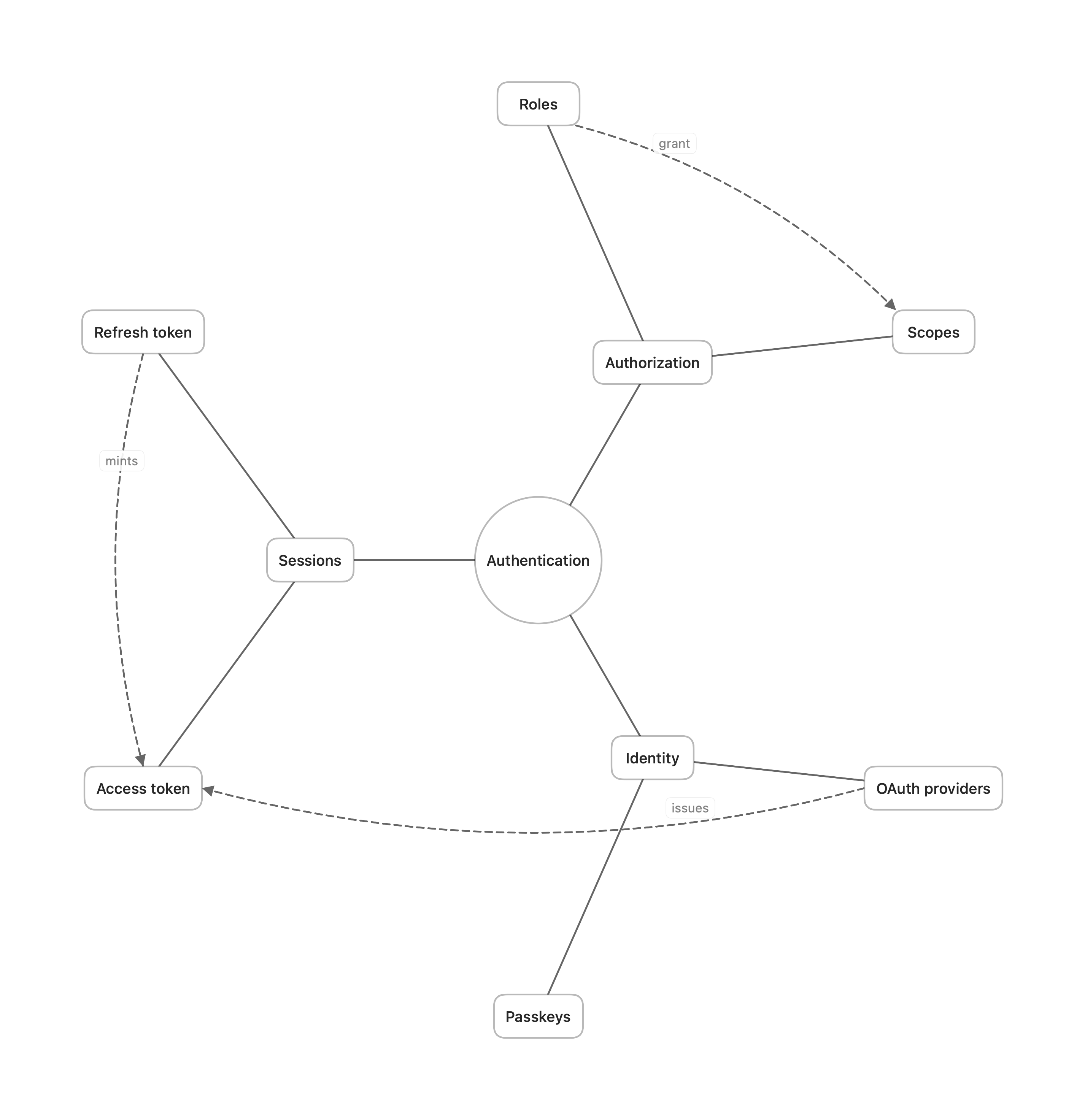
conceptmap root((Authentication)) Identity OAuth providers Passkeys Sessions Access token Refresh token OAuth providers --|issues|--> Access token Refresh token --|mints|--> Access tokenThe first keyword is conceptmap. The hierarchy works exactly like a mind map (root plus
nested branches), but it renders as boxes with straight spokes instead of organic branches.
Link lines add labeled cross-links. A line containing a link operator is a relationship between two named nodes. It is drawn dashed and is not part of the indentation. All of these work:
A --- B(plain, unlabeled)A --> BA -->|relates to| BA -- relates to --> BA --|relates to|--> B
Cross-link endpoints reference existing nodes by id. An endpoint that names nothing known becomes a floating node on the outer ring.
Node shapes follow the flowchart vocabulary. The root is a
((circle)), and branches default to rounded. Use (rounded) or [rect] to override.